
Running a padel club involves more than keeping courts in good condition. Glass walls, playing surfaces, equipment, coaching activities and everyday operations all present risks that need to be identified and managed.
Effective padel club risk management starts with understanding these hazards and taking practical steps to protect players, staff and visitors. From regular court inspections and first aid arrangements to safeguarding and emergency procedures, a proactive approach helps clubs operate safely and responsibly.
As a specialist provider of padel insurance, Risk HQ understands the challenges facing club operators. Drawing on its comprehensive Risk Management Guide for Padel Clubs and Operators, this article explores the main health and safety considerations for UK padel facilities and explains how operators can put effective risk management procedures into practice.
How to Carry Out a Padel Club Risk Assessment
A padel club risk assessment helps operators identify potential hazards, evaluate who could be harmed and decide what precautions are needed. It should consider the entire facility, including courts, glass panels, fencing, walkways, changing rooms and spectator areas, as well as the activities taking place.
-
01
Identify hazards
Look for potential dangers involving court surfaces, glass, equipment, access routes and activities.
-
02
Assess the risks
Consider who might be harmed, how serious the consequences could be and how likely they are.
-
03
Control the risks
Take appropriate action, such as repairing defects, restricting access or improving procedures.
-
04
Record findings
Document significant hazards, existing controls, required actions and responsibilities.
-
05
Review controls
Check that precautions remain effective and update assessments following incidents or changes.
Practical Example: A Damaged Glass Panel
A routine inspection reveals a crack in one of the court’s glass panels.
A damaged panel could fail during play, potentially injuring players or staff.
Close the affected court immediately, prevent access and arrange a professional inspection and appropriate remedial work.
Document the defect and corrective actions. Confirm the court is safe before allowing play to resume.
Risk assessments should not be treated as a one-off exercise. Risk HQ’s guide recommends reviewing them annually and immediately after an incident. Reviews should also take place when changes to facilities, equipment or operations introduce new risks.
The Main Health and Safety Risks at Padel Clubs
Every padel facility has its own risk profile, but certain hazards require particular attention. Glass walls, playing surfaces, equipment and lighting all need regular inspection, while safe operating procedures are essential for protecting players, staff and visitors.
Risk HQ’s guide identifies several key areas that club operators should consider when developing and reviewing their health and safety arrangements.
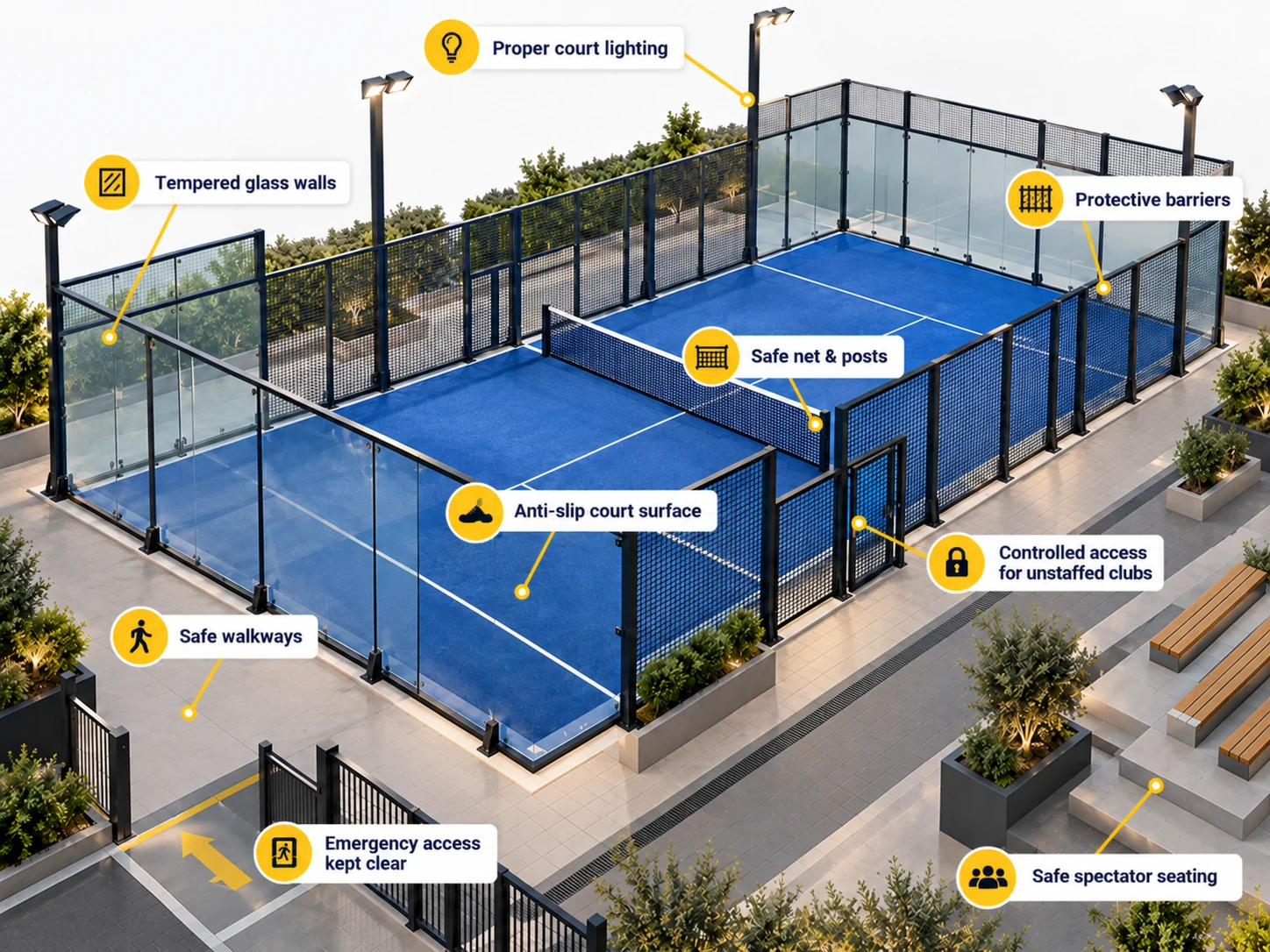
Court Infrastructure and Equipment
Glass panels, fencing, playing surfaces, nets and lighting can create hazards if damaged or poorly maintained. Regular inspections, prompt repairs and clear access routes help keep facilities safe for everyday use.
Player and Coaching Safety
Players may be unfamiliar with glass rebounds, safe movement or appropriate footwear. Clear inductions, competent coaching and sensible supervision arrangements help reduce the likelihood of preventable injuries.
Emergency Preparedness
Clubs need effective arrangements for responding to injuries, fires and other emergencies. This includes assessing first aid needs, establishing evacuation procedures and ensuring staff understand their responsibilities.
Operational and Environmental Risks
Weather conditions, events, equipment failures and unstaffed opening hours introduce additional considerations. Operators should establish clear procedures for monitoring facilities, restricting unsafe activities and recording incidents.
Managing these risks requires a consistent approach rather than occasional safety checks. Court inspections, staff training, emergency planning and incident reporting should work together to help clubs identify problems early and maintain safer facilities.
Padel Club Safety Checklist: What to Check and When
Regular inspections and clear safety procedures help padel clubs identify problems before they lead to accidents. Some checks should form part of daily operations, while others require periodic reviews or additional attention following changes, incidents or adverse weather.
The following checklist brings together practical recommendations from Risk HQ’s risk management guide. It provides a useful starting point, although every club should develop inspection procedures that reflect its own facilities, activities and risk assessments.
Daily Court and Equipment Checks
Routine Safety and Management Reviews
Additional Checks When Circumstances Change
Important: This checklist is a practical overview, not a substitute for a site-specific risk assessment or formal inspection records. Selections are not saved. Any unsafe court should remain closed until the relevant hazards have been addressed.
Completing these checks is only one part of an effective risk management programme. Operators should also assign responsibilities, document significant findings and ensure that identified hazards are addressed promptly. Regularly reviewing procedures helps clubs maintain appropriate safety standards as their facilities and activities evolve.
What Are the Health and Safety Requirements for UK Padel Clubs?
Padel club operators have legal responsibilities to protect employees and others who may be affected by their activities, including players and visitors. These duties cover risk assessments, fire precautions, first aid arrangements and safe working practices.
Understanding the difference between legal requirements and recommended good practice is important when developing a club’s health and safety procedures.
Risk Assessments and Written Safety Policies
Employers must assess the risks associated with their activities and take appropriate steps to control them. For padel clubs, this includes hazards involving courts, equipment, staff, players and surrounding facilities.
Where a business employs five or more people, it must record the significant findings of its risk assessments and have a written health and safety policy. Smaller clubs must still assess and manage risks, even where these written documentation requirements do not apply.
The Health and Safety Executive (HSE) provides guidance on conducting and reviewing risk assessments.
Fire Safety and Emergency Procedures
Padel facilities must have appropriate fire safety arrangements, including a suitable fire risk assessment, emergency evacuation procedures and relevant staff training.
The specific requirements depend on the premises and applicable fire safety legislation, which differs across the UK’s nations. Operators should ensure their arrangements reflect the risks identified at their facility.
First Aid for Staff and Players
Employers must assess their workplace first aid needs and provide appropriate equipment, facilities and personnel.
Although the Health and Safety (First-Aid) Regulations 1981 do not require employers to provide first aid for members of the public, the HSE strongly recommends including visitors in first aid planning.
For padel clubs, this is particularly important because players may experience falls, collisions, muscle injuries or heat-related illness.
Accident Reporting and Record Keeping
Certain work-related accidents must be reported under RIDDOR, depending on the circumstances and severity of the incident. Ordinary sporting injuries are not automatically reportable.
Maintaining accurate accident and near-miss records also helps clubs identify recurring hazards, review safety procedures and demonstrate that appropriate action has been taken.
Meeting legal requirements is the starting point. Regular inspections, effective staff training and clearly documented procedures help clubs maintain a safer environment for everyone using their facilities.
Keeping Children, Coaches and Event Participants Safe
Padel clubs often accommodate a wide range of activities, from casual matches and junior coaching sessions to organised tournaments. Each introduces different safety considerations, making appropriate supervision, staff competency and clear operating procedures essential.
Safeguarding Children and Junior Players
Clubs offering junior sessions should establish safeguarding procedures that reflect the age, ability and needs of participating children. These include appropriate supervision, safe arrival and collection arrangements, and access to emergency contact information.
Coaches working with children should have suitable qualifications, safeguarding training and relevant background checks where appropriate to their role. Clubs should also obtain parental consent, establish clear behaviour policies and ensure junior activities are conducted in a safe environment.
Age restrictions and supervision arrangements should reflect the club’s specific circumstances rather than relying on a single approach for every facility.
Responsibilities for Padel Coaches and Instructors
Whether coaches are directly employed or work independently, operators should check their qualifications, communicate safety procedures and clarify responsibilities.
Induction and ongoing training should address injury prevention, appropriate warm-up techniques, safe use of facilities and procedures for responding to accidents.
Clubs should not assume that engaging a self-employed coach automatically removes their own responsibilities towards players.
Managing Safety at Padel Tournaments and Events
Tournaments and organised events introduce additional risks, particularly when participants and spectators are unfamiliar with the venue.
An event-specific risk assessment should consider court conditions, spectator access, crowd movement, first aid arrangements and weather-related hazards.
Event organisers should also brief staff and volunteers on emergency procedures, assign responsibility for safety and inspect facilities before activities begin.
Prioritise safeguarding, appropriate supervision and safe arrival and collection procedures.
Verify competency, communicate safety expectations and establish clear responsibilities.
Assess event-specific hazards, manage spectators and prepare staff for emergencies.
Managing Additional Risks at Unstaffed Padel Clubs
Unstaffed padel facilities allow operators to offer flexible playing hours without maintaining a permanent on-site presence. However, operating without staff introduces additional safety, security and operational challenges that need to be carefully assessed.
One of the main concerns is how quickly assistance can reach a player who suffers an injury or encounters an emergency. Without staff available to intervene, clear emergency instructions, reliable communication systems and appropriate access arrangements become particularly important.
Operators must also consider unauthorised entry, equipment failures, court maintenance and the potential misuse of facilities. Problems that might be identified immediately at a staffed club could go unnoticed for longer at an unstaffed venue.
Key Safety Measures for Unstaffed Padel Facilities
Risk HQ’s guide recommends considering several practical measures to reduce these risks. These include secure access systems, appropriate lighting, clearly marked emergency exits, visible safety instructions and regular facility inspections.
The following table summarises the principal risks and potential control measures.
| Potential Risk | Possible Control Measures |
|---|---|
| Unauthorised Access | Use secure entry systems such as keypads, access cards or booking apps, with arrangements to identify who is using the facility. |
| Injuries and Emergencies | Display clear emergency instructions, provide appropriate first aid equipment and establish procedures for obtaining assistance when no staff are present. |
| Equipment Failures | Arrange regular inspections of courts, lighting and equipment. Provide a straightforward way for players to report defects. |
| Security and Vandalism | Consider suitable security monitoring, controlled access and CCTV where appropriate, with data protection requirements in mind. |
| Booking and Access Problems | Ensure players have clear instructions for accessing the facility and a reliable method of obtaining assistance if booking or entry systems fail. |
| Maintenance and Cleanliness | Schedule routine inspections, cleaning and maintenance. Keep records of defects and the actions taken to address them. |
Why Insurer Notification Matters
An important consideration highlighted in Risk HQ’s guide is the need to inform insurers when a club operates without staff on-site.
Unstaffed operations can change the risks associated with a facility and may affect insurance requirements. Operators should disclose relevant changes to their insurer or broker and check whether additional safety measures or a specific risk assessment are required.
A club should not assume that arrangements suitable for staffed opening hours will automatically be appropriate when operating unstaffed.
Reviewing these arrangements before introducing unattended opening hours can help operators identify gaps in their safety procedures and reduce the likelihood of avoidable incidents.
What Should a Padel Club Do After an Accident?
Even with appropriate safety procedures in place, accidents can still happen. Padel club operators need a clear process for responding to injuries, recording incidents and identifying any changes needed to prevent similar situations.
The immediate priority is to assist anyone who has been injured and prevent further harm. Once the situation is under control, the club should record what happened, assess whether the incident needs to be reported and investigate any contributing hazards.
-
01
Respond and Make the Area Safe
Provide appropriate assistance, call emergency services where necessary and prevent further injuries or exposure to hazards.
-
02
Record the Incident
Document the date, location, people involved, circumstances and immediate actions taken.
-
03
Check Reporting Requirements
Assess whether statutory reporting obligations apply and notify your insurer or broker as required.
-
04
Investigate and Improve
Identify contributing factors, correct safety issues and update procedures to reduce the risk of recurrence.
When Must a Padel Club Report an Accident?
In Great Britain, certain work-related injuries must be reported under the Reporting of Injuries, Diseases and Dangerous Occurrences Regulations (RIDDOR).
However, not every injury sustained while playing padel is reportable. Injuries arising from normal participation in sport are generally excluded. Reporting may be required where an accident is connected to work activities, such as defective equipment or inadequate facility management, and the relevant reporting criteria are met.
For example, an injury to a player caused by defective court equipment may be reportable if the player is taken directly to hospital for treatment. Different criteria apply to injuries involving employees.
The Health and Safety Executive’s RIDDOR guidance explains these distinctions. Separate reporting arrangements apply in Northern Ireland.
Clubs should also notify their insurance broker or insurer promptly where an incident falls within their policy’s notification requirements. Maintaining accurate records of accidents and near misses helps operators investigate potential hazards and demonstrate the steps taken to improve safety.
Building a Safer Padel Club
Effective risk management is an ongoing process. By carrying out regular assessments, maintaining safe facilities, preparing staff and learning from incidents, padel club operators can create safer environments for players, employees and visitors.
Risk HQ’s comprehensive Risk Management Guide for Padel Clubs and Operators explores these considerations in greater detail, providing additional practical guidance to help clubs manage risks as their operations develop.