

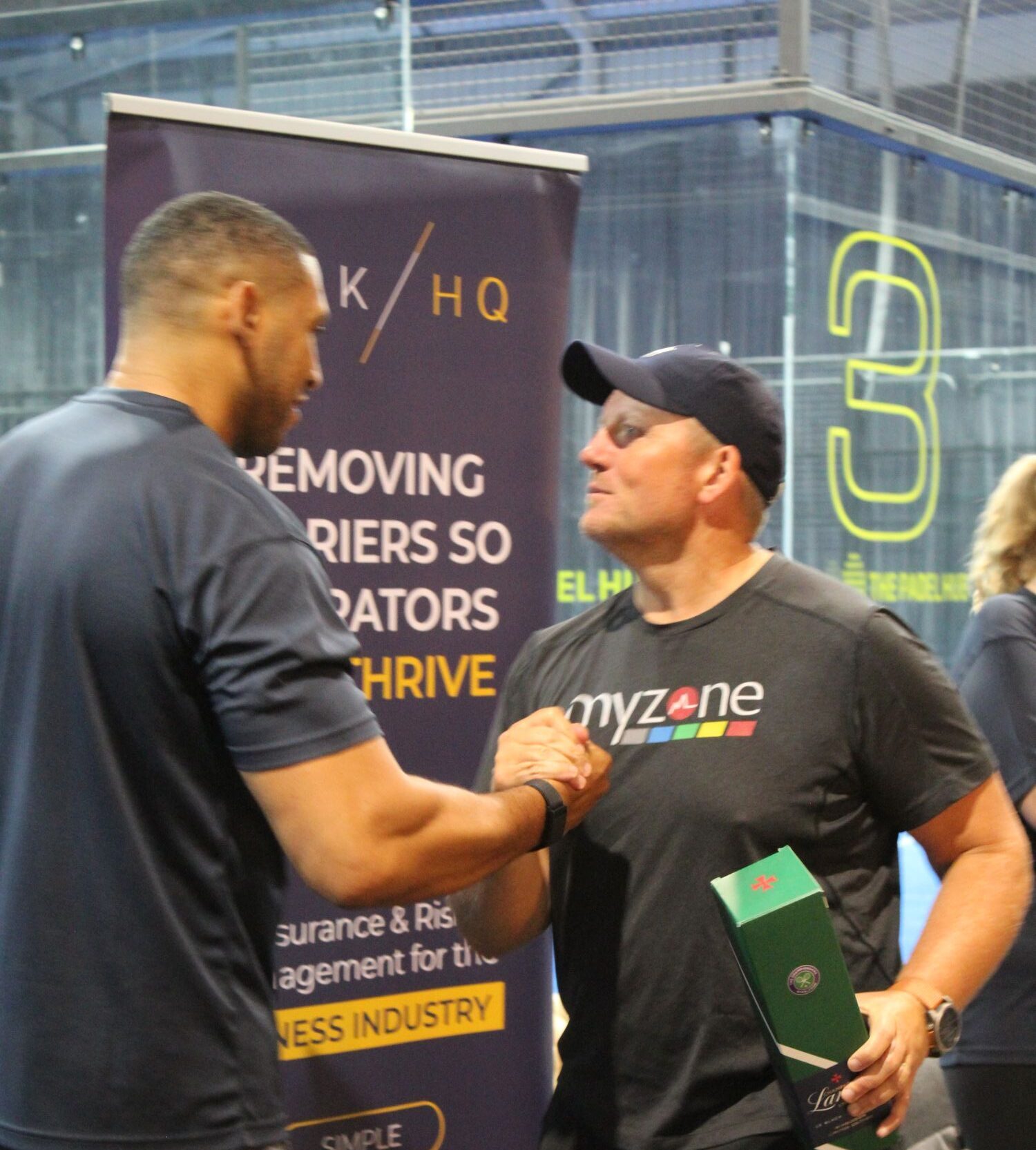
Because we are actively involved in the sector, we understand the real challenges padel operators face.
From planning and construction through to liability, operations, and long-term growth, we support businesses at every stage — from new club launches to established multi-site operators.
As one of the leading insurance brokers in the UK padel market, we combine a genuine passion for the sport with specialist industry knowledge.
This allows us to provide tailored insurance solutions designed specifically for the needs and risks of padel businesses, making us the specialist padel insurance broker that truly understands the sector.
We can arrange cover for your property, including assets kept in the open, as well as protection against loss of revenue.
We also arrange cover for the various liability risks your business may face and can arrange insurance for any events you host.
All of this can be combined into a bespoke padel club insurance policy designed specifically to protect your business.
This isn’t generic cover.
It’s specialist protection for a specialist sport.
We take great pride in delivering exceptional results, and the most rewarding part of our work is hearing how much of a difference it makes to our clients. Every piece of feedback motivates us to keep improving and to continually raise the standard of what we deliver. Simply put, we love what we do — and it means even more when our clients love the results too.
Whether you are opening your first court or expanding your portfolio of clubs, we are here to help you protect your investment, drive your growth, and build a successful, sustainable business with a padel business insurance broker that knows the market and the risks involved.
Complete the form below to request your copy of Risk HQ’s Risk Management Guide. Simply provide your details and our team will email you the guide.
If you would also like to discuss your club’s insurance arrangements, you can let us know using the form.
On a personal level, the decision to move forward with Risk HQ was an easy one due to the guidance, service and communication you have provided throughout the process, so thank you for this!
Padelheim
Padel Centers face a unique mix of risks, including player injuries, damage to courts and structures, equipment loss, staff liabilities, and business interruption. Standard sports or leisure insurance may not fully address these exposures, so tailored cover is essential to protect the business, staff, and players.
Practical example: A standard leisure policy may cover the building, contents and general public liability but exclude or inadequately cover specialist features such as panoramic glass courts, steel structures, artificial turf, floodlighting, coaching activities, and tournaments. After a storm damages a court, the center could discover that the replacement cost exceeds the policy limit or that key components are not covered, leaving it to fund a substantial shortfall.
Most Padel Centers require a combination of the following:
While not always legally mandatory, Public Liability Insurance is essential. Most landlords, local authorities, federations, and event partners require it, and it protects against claims arising from injuries or property damage connected to your operations.
Practical example: If a player slips on a wet surface at a Padel Center that has no Public Liability Insurance and the center is found legally liable, the business may have to pay its own legal costs, compensation, and associated expenses. It may also breach contractual requirements imposed by a landlord or event partner, putting its tenancy, events, and financial stability at risk.
Common limits range from £5 million to £10 million, depending on:
An insurance broker can help determine the appropriate limit.
Practical example: A small two-court center offering social play may have a different liability requirement from a larger, ten-court venue that hosts regional events. A higher limit may be required for the larger venue because of its high-profile visitors and greater overall liability exposure.
Yes, but only in certain circumstances.
Public Liability Insurance does not automatically cover every player injury. If an injury is caused purely by accident and the center is not legally at fault, there will generally be no liability claim under the policy. Where the center is found to be legally liable, the amount of compensation will depend on the nature and severity of the injury and its financial and personal consequences for the injured person, subject to the policy terms, exclusions, and cover limit.
Yes, under Property Insurance, provided the courts and structures are declared correctly. This can include:
Accurate valuations are critical to avoid underinsurance. (see Question 14, Underinsurance)
Practical Advice: Self-employed or freelance coaches should carry their own Public Liability Insurance. Before allowing them to operate on-site, the center should obtain evidence that the policy is current, provides an adequate limit of indemnity, and covers the coaching activities being undertaken. The center should keep this evidence on file and check it again at each renewal, because an expired or unsuitable policy could leave the coach unable to meet a claim and expose the center to additional legal costs, contractual disputes, and reputational damage.
Yes. Indoor centers may face higher risks related to:
Outdoor centers are more exposed to:
Your policy should reflect the specific risk profile of your facility.
Practical example: A fire at an indoor center could damage the building and courts and force the entire facility to close for several months, making adequate rebuilding and business interruption cover particularly important. By contrast, a severe storm at an outdoor center could damage fencing, floodlighting, artificial turf, and exposed court structures without affecting a main building. Each policy must therefore reflect the different property, and closure risks created by the facility’s design and location.
Often yes, but not automatically. You should inform your insurer if you:
Some events may require additional cover or endorsements.
Practical example: A center hosts a large regional tournament with substantially more players, spectators, temporary staff, and external organisers than during its normal operations but does not tell its insurer. If a spectator is seriously injured or the venue is damaged during the event, the insurer may investigate whether the undisclosed increase in activity affected the cover provided. Depending on the policy terms and the significance of the non-disclosure, the claim could be delayed, reduced, disputed, or declined, leaving the center to meet legal costs, compensation, repairs, and lost income from its own funds.
Premiums are influenced by:
Risk management measures (clear rules, signage, maintenance logs) can reduce costs.
Practical Examples: A location that has a history of flooding or represents a high flood risk may not easily obtain full cover that includes Flood. Only cover with a substantial Flood Excess may be available.
Where there is a history of previous insurance claims, Insurers will generally be cautious or may not wish to quote. Premiums could potentially be loaded where quotations are provided. Specific cover may be excluded where there is a perceived likelihood of future claims.
When choosing an insurer, consider:
Many operators choose either:
A broker can compare multiple insurers and negotiate terms on your behalf.
Practical Advice: Insurance Brokers are under an obligation to reveal the level of commission that they receive from an insurer. Do not be afraid to ask.
You are entitled to receive ‘Best Advice’ so check that a recommendation is in your best interests and not the broker’s. For example, is the broker obtaining extra commission based on the volume of business placed with an insurer. This could adversely influence ‘Best Advice’.
For most Padel Centers, using a specialist insurance broker is recommended.
Brokers:
Direct insurers may be suitable for very small or single-court operations, but coverage can be more limited.
At least once a year, and immediately if you:
Generally, if your center is underinsured, most insurers may:
However, Risk HQ will provide practical advice and support to help avoid underinsurance.
Practical example: If a Padel Center has a true rebuilding value of £2.2 million but is insured for only £1.1 million, it is insured for 50% of the amount required. Depending on the policy terms, a £400,000 insured loss could therefore be reduced proportionally to £200,000, leaving the center to fund the remaining £200,000 itself.
Prepare the following: