
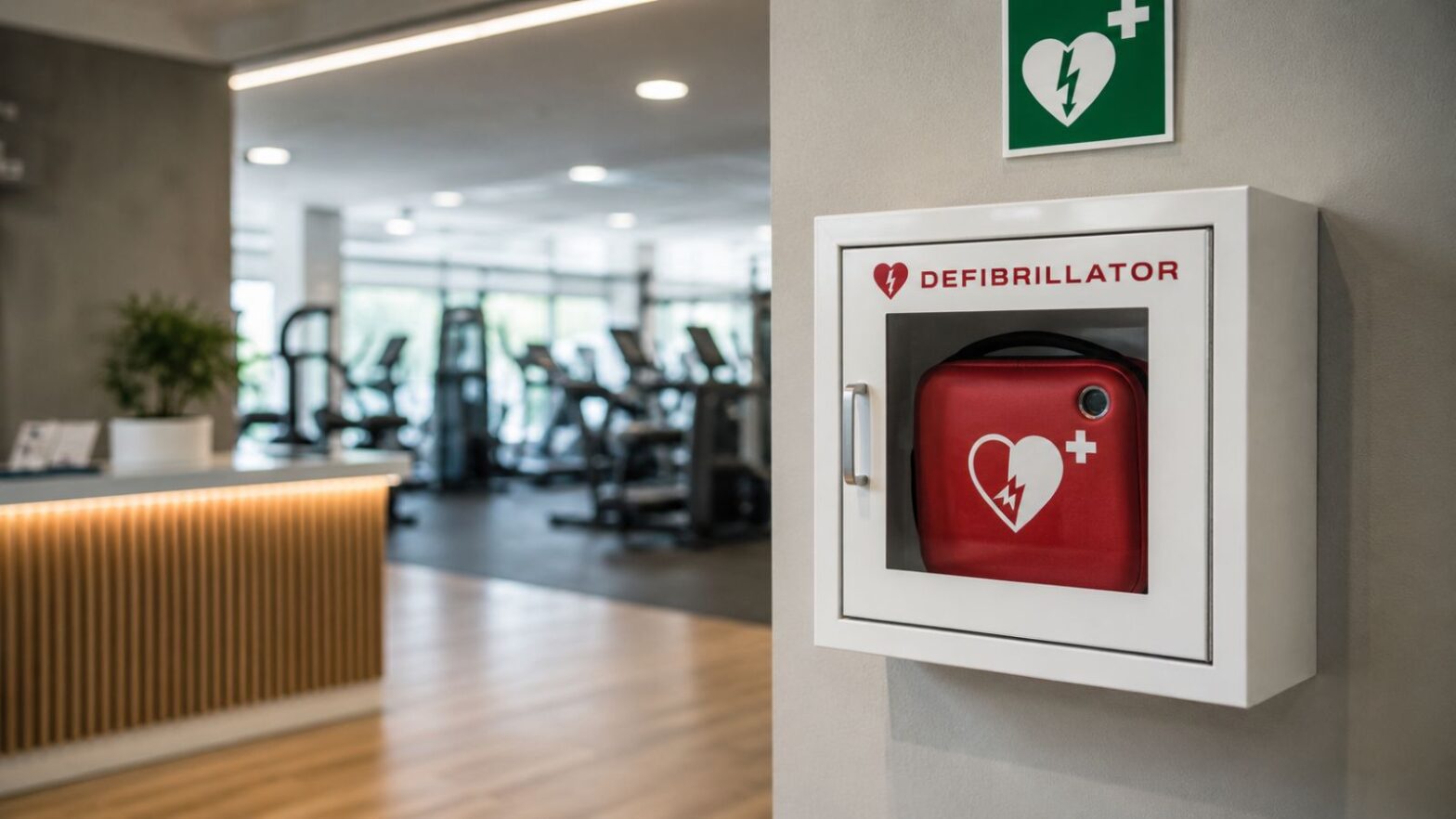
The publication of new guidance from ukactive on the use of defibrillators marks an important development for the fitness and leisure sector. While automated external defibrillators (AEDs) are not currently a legal requirement in gyms or leisure facilities, expectations around emergency preparedness are changing rapidly.
For operators, the message is clear: preparedness for sudden cardiac arrest is no longer viewed as optional best practice — it is becoming a core part of responsible facility management.
Why This Matters
Gyms and leisure facilities are unique environments. They welcome large numbers of people every day, many engaging in strenuous physical activity, often across a broad range of ages and health conditions. Although cardiac incidents remain relatively rare, when they do occur, speed of response is critical.
The evidence is well established: early CPR and access to a defibrillator within the first few minutes can dramatically increase survival rates following sudden cardiac arrest.
The latest guidance reflects a growing recognition across the sector that operators should be able to demonstrate they have:
- considered the risks,
- implemented appropriate emergency procedures,
- trained staff effectively, and
- ensured access to life-saving equipment.
What Operators Should Do Now
1. Review Your Risk Assessment
The starting point should be a thorough review of your existing health and safety and first-aid risk assessments.
Operators should consider:
- the size and layout of the facility,
- average daily footfall,
- the type and intensity of activities taking place,
- customer demographics,
- response times for local ambulance services,
- whether current first-aid arrangements remain sufficient.
For multi-site operators, consistency across locations is equally important. A centralised review process can help identify gaps in provision and ensure standards are aligned across the estate.
2 Ensure You Have Appropriate AED Provision
Although not mandated by law, an AED is increasingly viewed as an essential safety measure in fitness environments.
Where a defibrillator is already in place, operators should check:
- it is clearly visible and accessible,
- signage is prominent throughout the building,
- batteries and electrode pads are in date,
- regular inspections are documented,
- the device is registered on The Circuit, the national defibrillator network used by emergency services.
Where no AED is currently available, operators should assess whether this position remains defensible given current sector expectations and the nature of their activities.
Accessibility is particularly important. A defibrillator locked away in an office or inaccessible outside staffed hours may significantly reduce its effectiveness during an emergency.
3. Prioritise Staff Training and Confidence
Possessing a defibrillator alone is not enough. Staff must feel confident responding under pressure.
Operators should ensure relevant employees are trained in:
- recognising the signs of sudden cardiac arrest,
- performing CPR,
- using an AED,
- managing emergency communications,
- directing emergency services to the casualty quickly.
Training should not be treated as a one-off exercise. Refresher sessions, scenario-based drills and regular reviews help maintain competence and confidence.
For larger facilities, operators may also wish to designate specific emergency response leads during each shift.
4. Review Emergency Action Plans
Emergency operating procedures should be reviewed to ensure cardiac incidents are addressed clearly and practically.
This includes:
- who takes charge during an incident,
- who retrieves the AED,
- who contacts emergency services,
- how access is provided for paramedics,
- how incidents are recorded and reviewed afterwards.
Simple operational issues can make a significant difference in an emergency. For example:
- Can ambulance crews easily locate the facility entrance?
- Are staff able to direct paramedics quickly to studios, pools or sports halls?
- Is there reliable communication across large sites?
Testing procedures through live exercises can often expose weaknesses that are not obvious on paper.
5. Understand the Wider Duty of Care
While there is no standalone legal obligation requiring gyms to install defibrillators, operators continue to owe duties under health and safety legislation and occupiers’ liability principles.
In practice, this means organisations should be able to demonstrate they have taken reasonable steps to protect customers, staff and visitors.
As AED provision becomes more widespread across the sector, the benchmark for what may be considered “reasonable” is likely to evolve. Operators who fail to assess the issue properly may face increased scrutiny following a serious incident.
Insurance providers may also begin paying closer attention to emergency preparedness measures as part of risk management assessments.
A Sector-Wide Shift Towards Preparedness
The direction of travel is clear. Across schools, sports venues, workplaces and public facilities, defibrillator provision is becoming increasingly normalised.
For gyms and leisure operators, the latest guidance should be viewed not simply as a compliance issue, but as part of a broader commitment to member safety and operational resilience.
Facilities that invest in robust emergency planning, staff training and accessible life-saving equipment are better positioned to protect both their customers and their organisations.
In many cases, the question is no longer whether a facility should have a defibrillator — but whether it can justify not having one.